
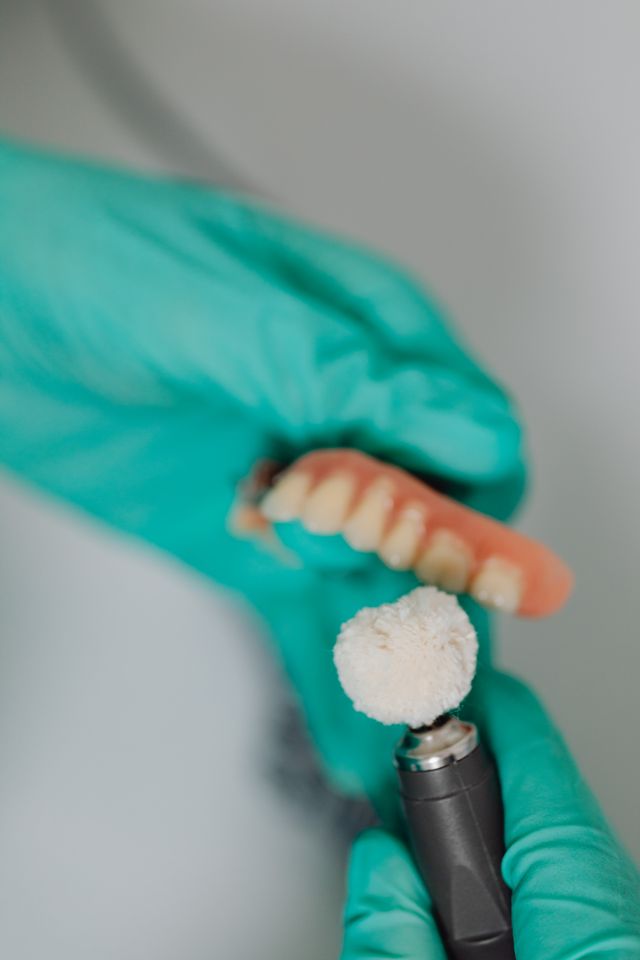
 Dentures in Staten Island can restore missing teeth, improve chewing and speaking, and help patients regain a complete, natural-looking smile. Depending on the number of missing teeth and the condition of the remaining teeth, gums, and jawbone, treatment may involve full dentures, partial dentures, or implant-supported dentures. At Ideal Smiles Dental, Dr. Lawrence Shtarkman and Dr. Daniel Kluchman provide individualized tooth-replacement treatment based on each patient’s oral health and restorative needs.
What Are Dentures?
Dentures are removable dental prostheses designed to replace missing teeth and surrounding tissues. Modern dentures are individually designed to restore dental function while providing an appearance that complements the patient’s smile and facial features.
The type of denture recommended depends primarily on how many teeth are missing, the condition of the remaining teeth, gum and bone health, bite, and the patient’s individual treatment goals.
Full Dentures
Full dentures, also called complete dentures, replace an entire upper or lower arch of missing teeth. They may be appropriate when all of the natural teeth in an arch have already been lost or when remaining teeth cannot reasonably be preserved.
A complete denture is designed to fit over the gums and underlying supporting tissues. Proper fit, tooth position, bite, and appearance are all important parts of denture treatment.
Full dentures can help:
- Replace an entire arch of missing teeth
- Restore the appearance of the smile
- Improve chewing compared with having no teeth
- Support the lips and cheeks
- Improve speech affected by extensive tooth loss
Partial Dentures
A partial denture replaces several missing teeth when useful natural teeth remain. The replacement teeth are incorporated into a removable prosthesis designed to fit around and work with the remaining teeth.
Partial dentures can be particularly useful when missing teeth are located in different areas of the mouth or when a fixed bridge or dental implants are not the preferred treatment.
Benefits may include:
- Replacing multiple missing teeth with one prosthesis
- Improving chewing and appearance
- Helping maintain appropriate dental spacing
- Providing a removable alternative to fixed tooth replacement
Implant-Supported Dentures
Dental implants can be used to provide additional retention and stability for certain types of dentures. Rather than relying entirely on the gums and underlying tissues for support, an implant-supported restoration connects to dental implants placed within the jawbone.
Depending on the treatment design, implant-supported dentures may offer:
- Greater stability than conventional removable dentures
- Reduced movement while eating or speaking
- Improved chewing function for some patients
- Additional confidence in the stability of the prosthesis
- Transfer of some chewing forces through the implants to the jawbone
Implant-supported dentures still require careful daily cleaning and professional maintenance. The denture, implants, gums, and areas around the implant attachments must all be kept clean to help maintain healthy supporting tissues.
Learn more about dental implants in Staten Island and how implants can be used to replace individual or multiple missing teeth.
Traditional Dentures vs. Implant-Supported Dentures
Traditional and implant-supported dentures can both provide effective tooth replacement, but there are important differences between them.
Traditional removable dentures obtain their support primarily from the gums and underlying tissues. Implant-supported dentures use strategically placed dental implants to provide additional retention or support.
The appropriate option depends on several factors, including:
- The number and location of missing teeth
- Available jawbone
- Gum and overall oral health
- Medical history
- Desired stability and function
- Ability to undergo implant treatment
- Treatment time and cost
- Patient preferences
Neither option is automatically right for every patient. A dental examination and appropriate imaging can help determine which approaches are reasonable for your particular situation.
What Is the Process for Getting Dentures?
Denture treatment begins with an evaluation of the teeth, gums, jawbone, bite, and overall oral health. If natural teeth remain, the dentist determines whether they can be preserved and incorporated into the treatment plan or whether additional dental treatment is necessary.
The denture process may include:
- Dental examination and treatment planning: Your dentist evaluates your mouth and discusses appropriate tooth-replacement options.
- Impressions or digital records: Accurate records are obtained to help design the prosthesis.
- Bite and tooth-position planning: The relationship between the upper and lower jaws and the appearance of the replacement teeth are considered.
- Denture fabrication: The prosthesis is created according to the treatment plan.
- Fitting and adjustments: The dentist evaluates fit, bite, comfort, and appearance and makes adjustments when necessary.
- Follow-up care: Additional adjustments may be required as the patient adapts to the new denture.
Getting Used to New Dentures
New dentures often require an adjustment period. They can initially feel different when eating, speaking, or moving the tongue and cheeks. Patients typically become more comfortable as they gain experience using the prosthesis.
During the adjustment period:
- Begin with softer foods and gradually introduce firmer foods as comfort improves
- Cut food into smaller pieces when necessary
- Practice speaking and reading aloud if certain words initially feel different
- Follow your dentist’s instructions regarding denture wear
- Schedule an adjustment if persistent sore spots or significant discomfort develop
A denture should not repeatedly cause significant pain. Persistent irritation can indicate that an adjustment is necessary.
How to Care for Dentures
Good denture hygiene is important for maintaining the prosthesis as well as the health of the gums and remaining natural teeth.
- Clean dentures every day according to your dentist’s instructions
- Remove food debris and plaque from the denture surfaces
- Clean your gums, tongue, and any remaining natural teeth
- Handle dentures carefully to avoid dropping or damaging them
- Store removable dentures appropriately when they are not being worn
- Do not attempt to reshape or repair a denture yourself
- Maintain regular dental examinations even if you no longer have natural teeth
The American Dental Association’s MouthHealthy guide to dentures provides additional information about denture use, cleaning, and maintenance.
Do Dentures Need to Be Replaced?
Dentures do not necessarily remain unchanged for life. The mouth, gums, and underlying jawbone can change over time, which may alter how a denture fits.
Depending on the condition of the prosthesis and changes in the mouth, a denture may eventually require adjustment, relining, rebasing, repair, or replacement.
Signs that a denture should be evaluated include:
- Increasing looseness or movement
- Persistent sore areas
- Difficulty chewing that has worsened
- Changes in the bite
- Cracks or damage to the denture
- A noticeable change in fit
Alternatives to Dentures
Dentures are one of several ways to replace missing teeth. Depending on the number and location of missing teeth and the condition of the surrounding structures, other options may include fixed dental bridges or dental implants.
Learn more about dental bridges in Staten Island or our guide to dental implants vs. dentures.
Dentures and Full Mouth Rehabilitation
Patients who have extensive tooth loss along with damaged, worn, or compromised remaining teeth may require more comprehensive treatment. Dentures, implants, crowns, bridges, periodontal treatment, and other procedures can sometimes be combined as part of an individualized restorative plan.
Learn more about full mouth rehabilitation in Staten Island.
Dentures in Staten Island, NY
Dentures in Staten Island can restore missing teeth and help improve chewing, speaking, appearance, and confidence. Full dentures, partial dentures, and implant-supported dentures each provide different approaches to tooth replacement, and the appropriate choice depends on your remaining teeth, gums, jawbone, oral health, and individual treatment goals.
Dr. Lawrence Shtarkman and Dr. Daniel Kluchman at Ideal Smiles Dental can evaluate your needs and help determine which tooth-replacement option is appropriate for you.
Contact Information
Ideal Smiles Dental
2955 Veterans Rd. W, Suite 2G
Staten Island, NY 10309
Phone: 718-535-1196
Email: idealsmilesdental@gmail.com